SimchaCam Guides
Is SimchaCam Only for Jewish Events?
SimchaCam started in the Jewish community, but families around the world are using it to share weddings, celebrations, religious events and other important moments.

Given the name, it's a fair question.
SimchaCam started with the Jewish community very much in mind.
It's the community I know. I know the traditions, I know how the events work, and I know the slightly unusual reality of having friends and family scattered across different cities and countries who can't always be there in person.
Weddings. Bar and bat mitzvahs. Brit milahs. Engagements. Family celebrations.
Simchas.
That's where the idea came from.
What I didn't expect was how quickly people outside the Jewish community would start finding SimchaCam too.
Apparently, the problem isn't particularly Jewish
When I started building SimchaCam, I didn't sit down and decide to create a global event-streaming platform.
The problem I wanted to solve was much narrower.
Someone is having an important family event. Someone else who matters to them can't be there. How do we let them watch without turning the whole thing into a giant video call?
My instinct was naturally to build for the community I understood.
But then something surprising started happening.
People I'd never marketed to began finding us.
We've seen SimchaCam used for a child's birthday party in Bahrain.
A Christian wedding conducted by a priest in New Zealand.
A beautiful chapel wedding in Australia.
And a traditional Filipino wedding in — you guessed it — the Philippines.
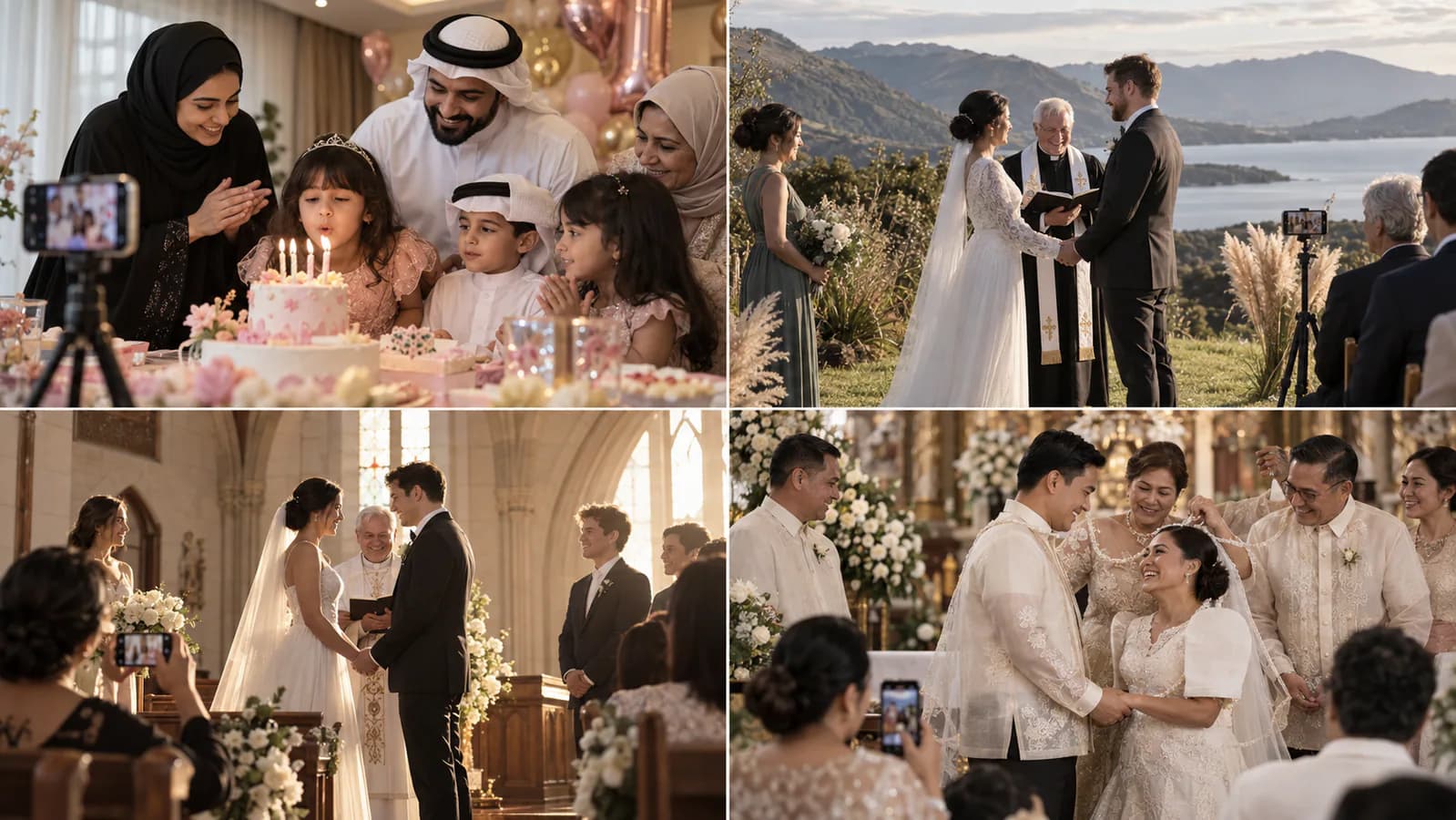
More recently, that list has become even more diverse.
SimchaCam has been used to stream Janmashtami, the Hindu festival celebrating the birth of Krishna.
And we've seen it used for a Catholic memorial Mass marking one month since someone's passing.
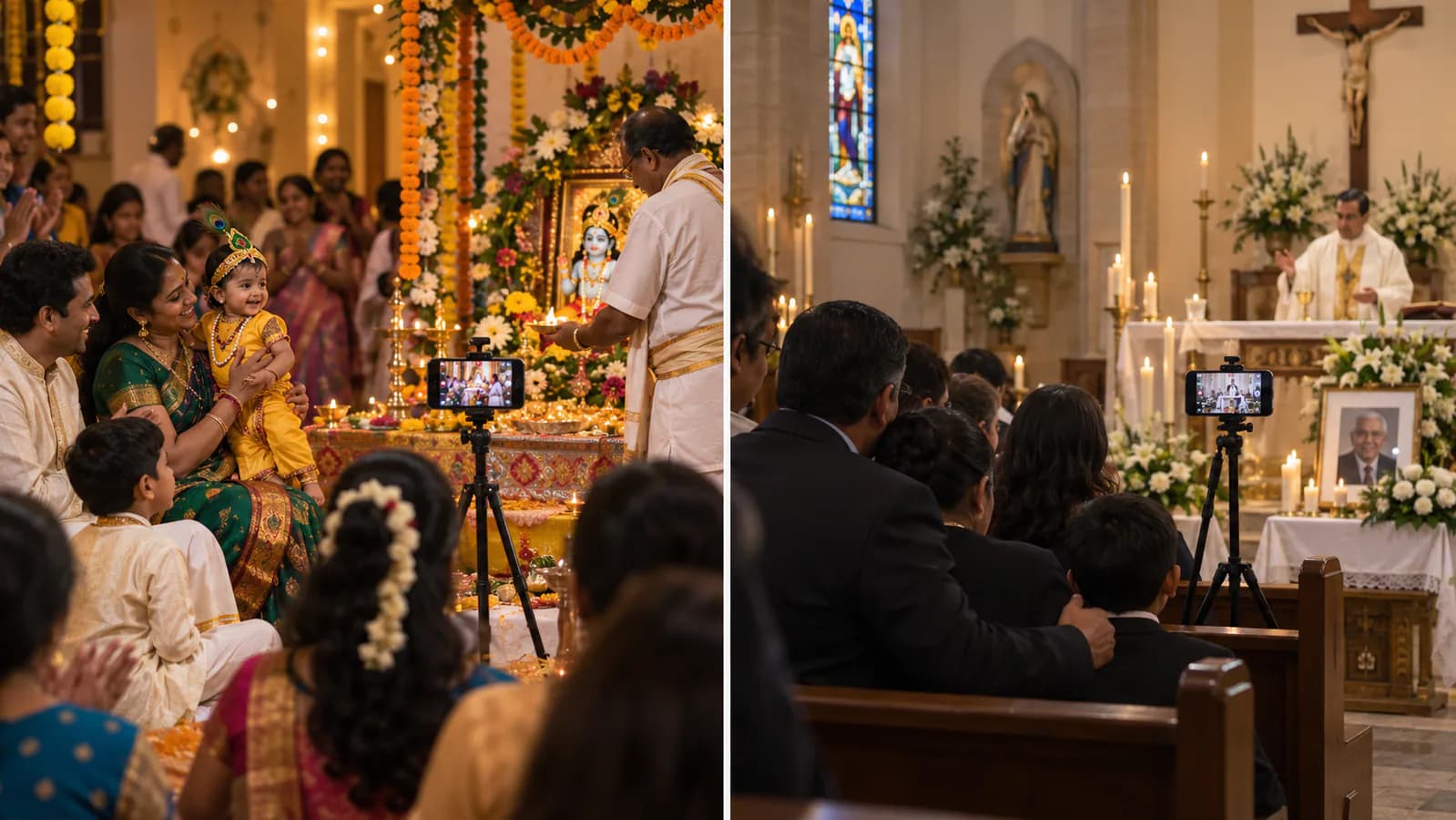
I certainly didn't have either of those in mind when I first started building a platform for streaming simchas.
But they both make complete sense.
Because underneath the different countries, religions and traditions, the reason for using SimchaCam is remarkably similar:
Someone important can't be there.
A simcha is a simcha — except when it isn't
The word simcha is Hebrew.
It means joy or celebration, and in Jewish communities we tend to use it as shorthand for the occasions we celebrate together.
That's where our name comes from, and I have no intention of pretending otherwise.
SimchaCam was born in the Jewish community.
But seeing how people actually use it has made me think a little more broadly about what we're building.
A couple getting married in Australia with relatives in London has fundamentally the same problem as a Jewish couple getting married in London with grandparents in Israel.
A family celebrating a birthday in Bahrain might have relatives thousands of miles away.
Someone celebrating Janmashtami might want family elsewhere in the world to be part of it.
Different countries.
Different religions.
Different traditions.
Same reason for pressing Go Live.
But the memorial Mass made me realise something else.
Not every important event is a celebration.
Sometimes people aren't trying to share a joyful moment at all.
Sometimes they simply want somebody they care about to be able to witness an important moment, even when distance makes being there in person impossible.
Perhaps that's a slightly broader interpretation of SimchaCam than the one I started with.
I'm quite happy with that.
Professional or just someone with a phone
Something else has surprised me as SimchaCam has grown.
I originally imagined the person streaming would usually just be a friend or relative with a phone.
And sometimes that's exactly what happens.
That's a big part of what we've designed SimchaCam around: you shouldn't need to understand cameras, encoders or broadcasting software to share an event.
Take out your phone. Set it up somewhere sensible. Start the stream.
But we've also had SimchaCam used by professional photographers.
I love that we've ended up with both.
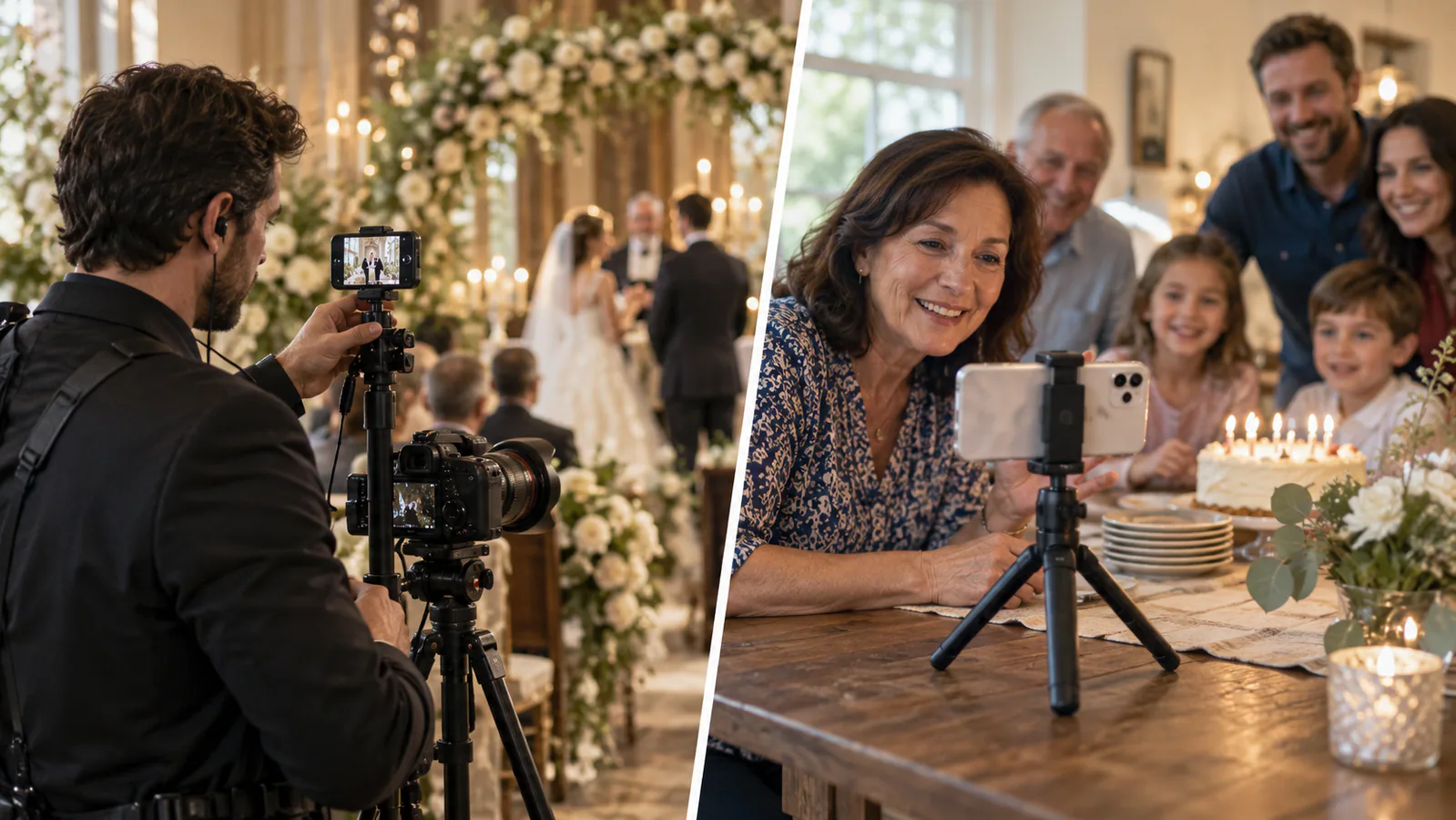
For a family member, SimchaCam can be a simple way to include somebody who couldn't make the journey.
For a photographer or event professional, it can become another service they can offer their client without needing an elaborate livestreaming setup.
The person behind the camera can change.
The person watching shouldn't have to think about any of it.
They receive a private link, open it and watch.
So, is SimchaCam only for Jewish events?
No.
But its Jewish roots are an important part of how it came to exist.
Starting with a community I understood meant building around real events, real traditions and a real problem rather than an abstract idea of what an “event streaming platform” ought to look like.
What I hadn't anticipated was just how universal that problem would turn out to be.
We've now watched SimchaCam travel considerably further than I expected when I started building it.
Different countries.
Different languages.
Different religions.
Different traditions.
Sometimes it isn't even a celebration.
But somewhere else in the world, there's often someone who wishes they could be there.
That's who SimchaCam is for.
Wherever they happen to be.